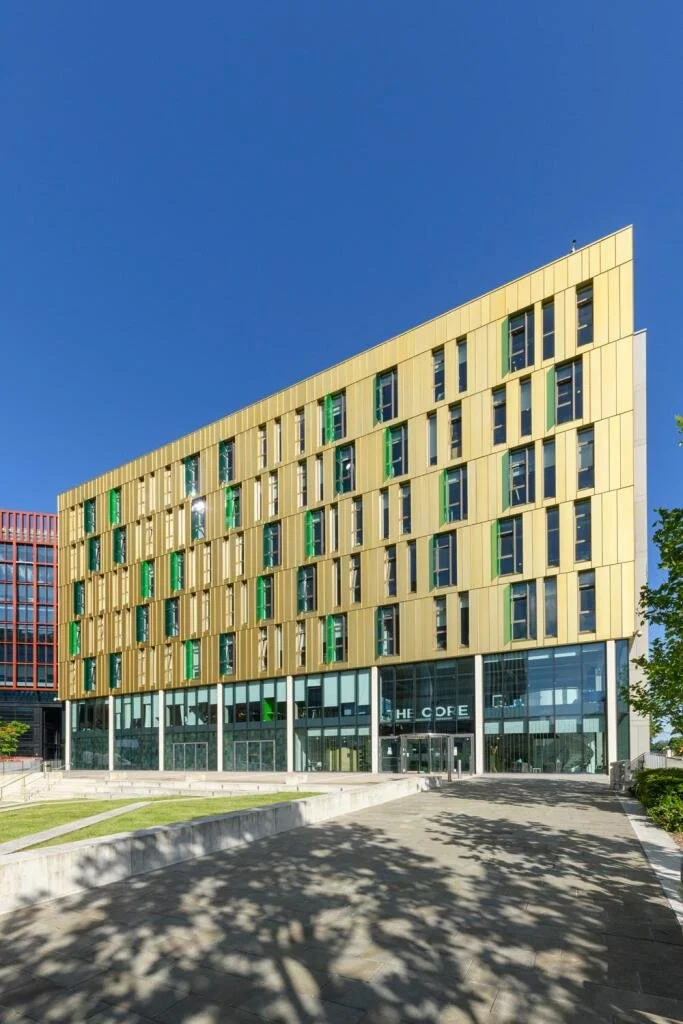
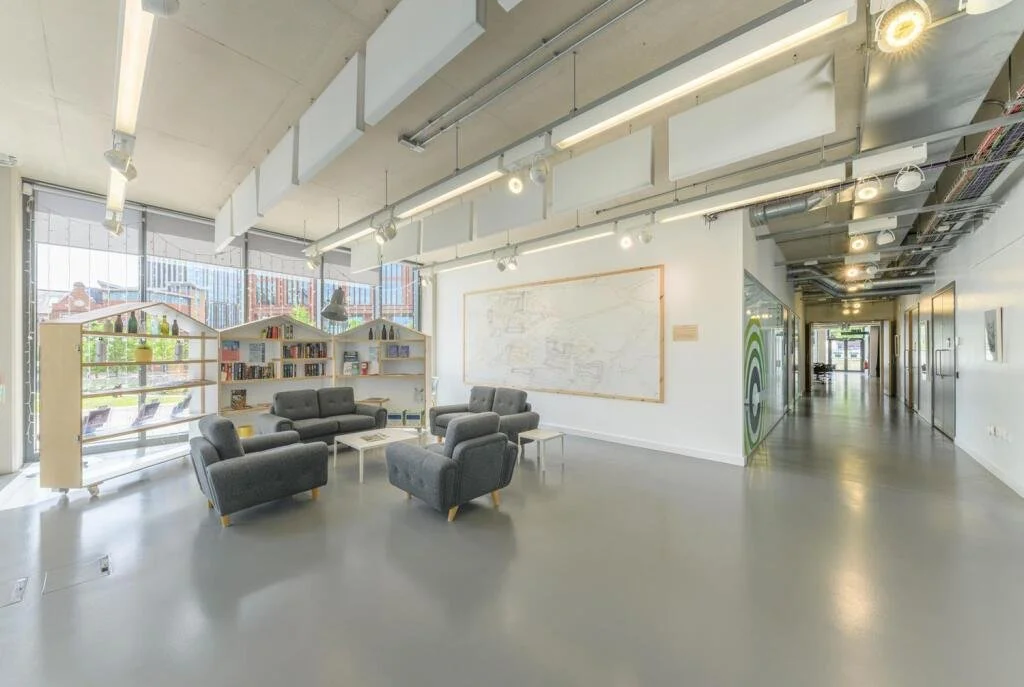
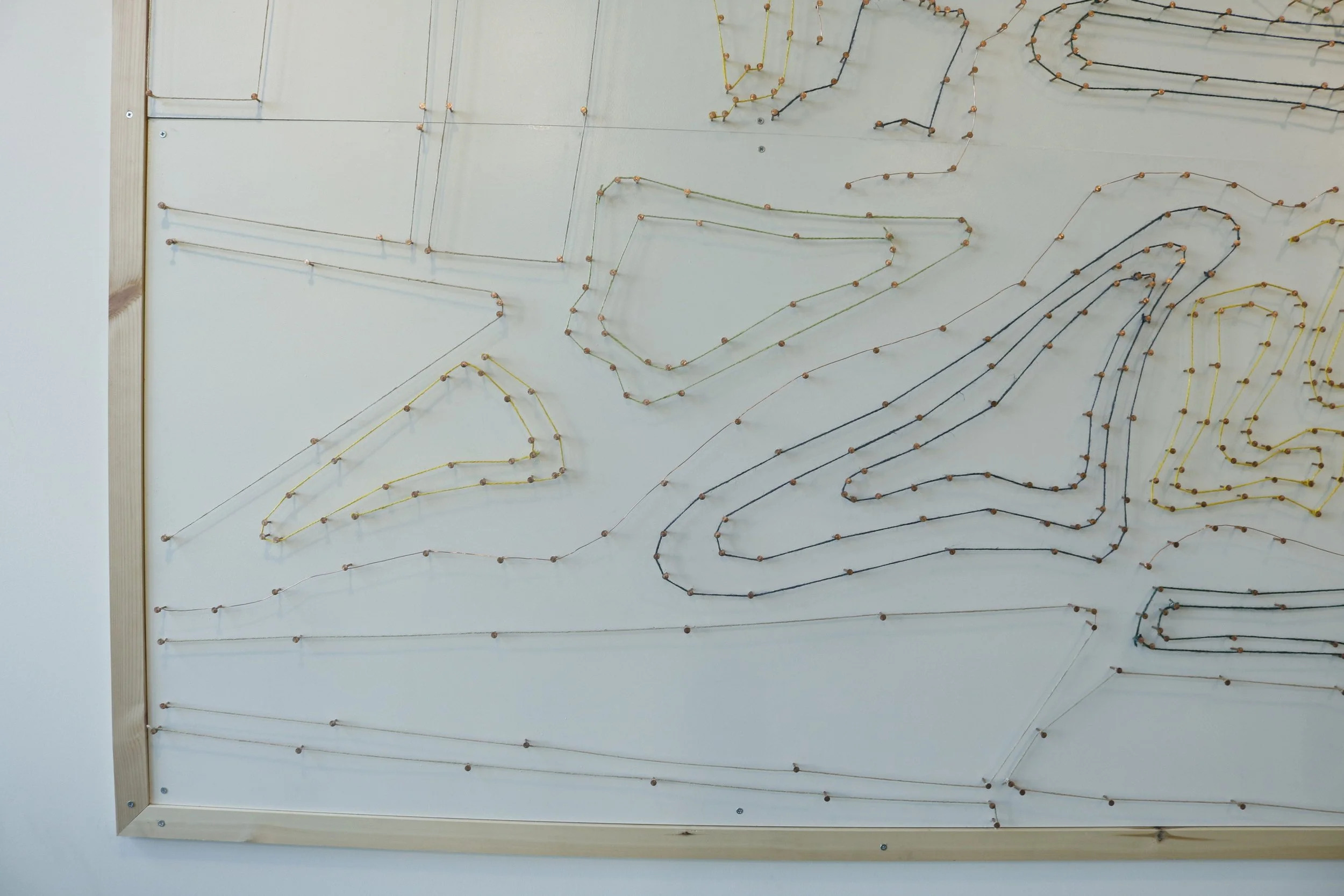
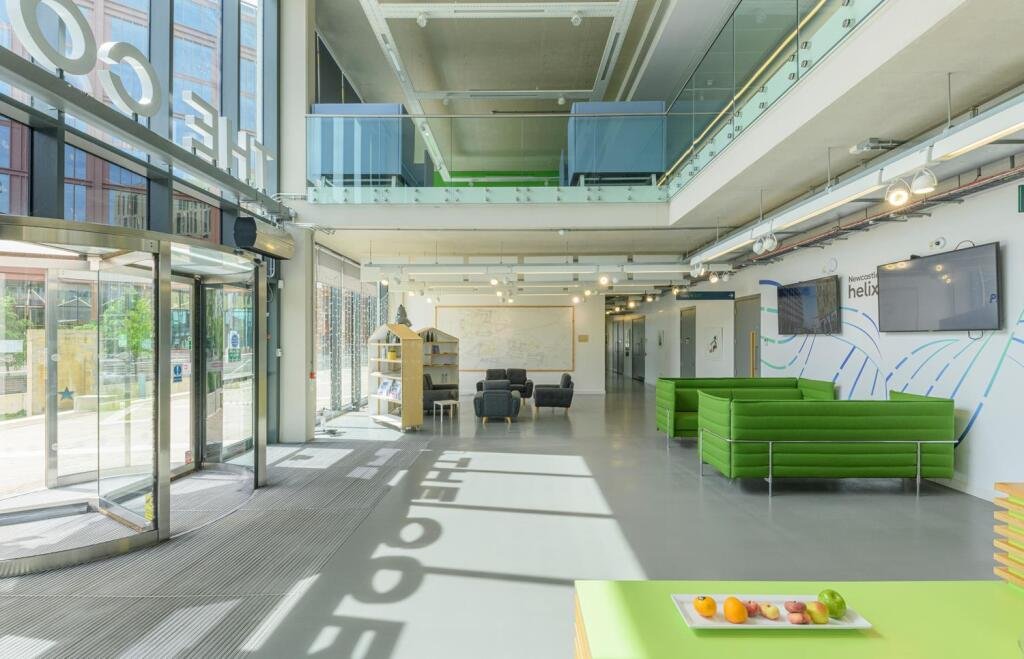
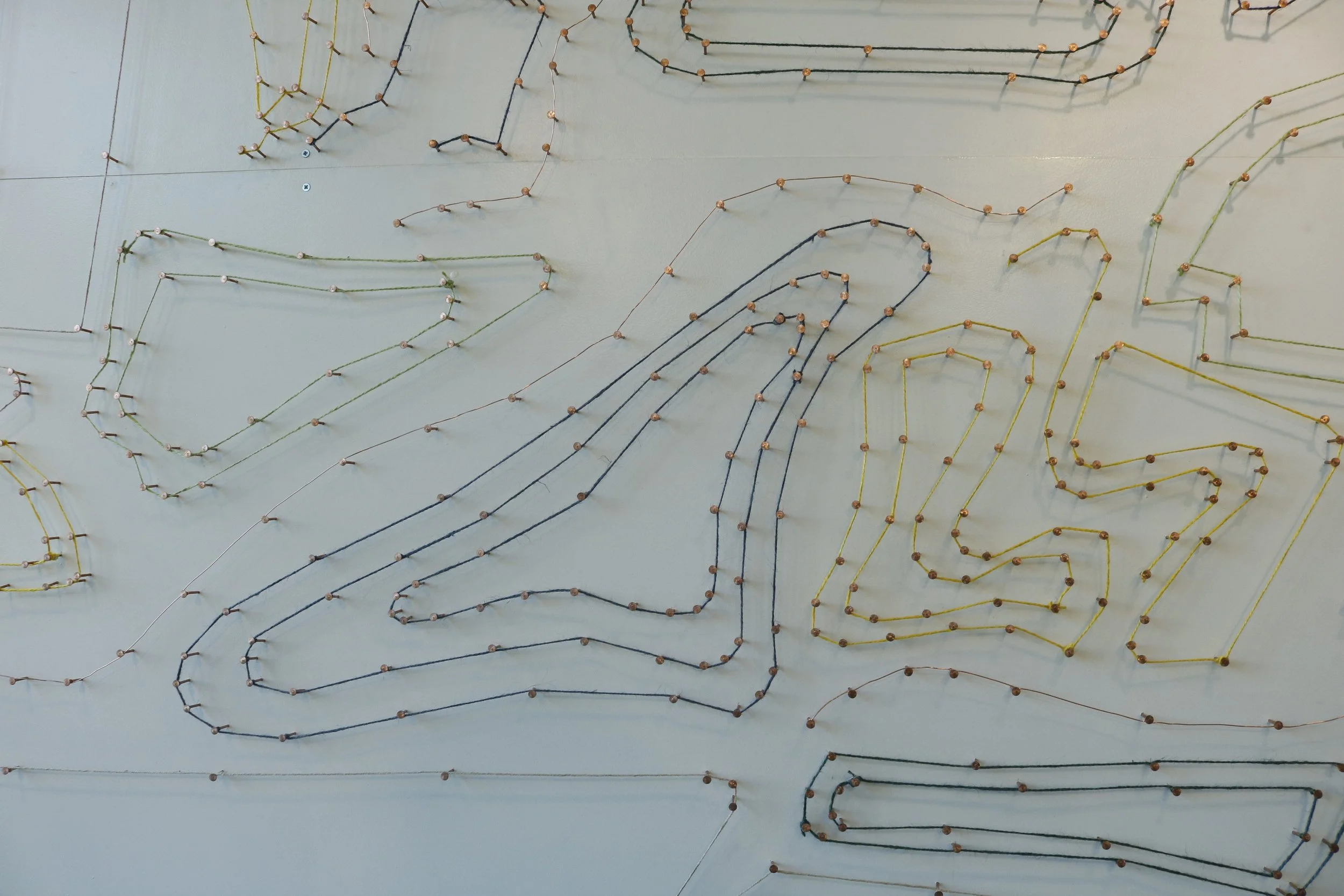
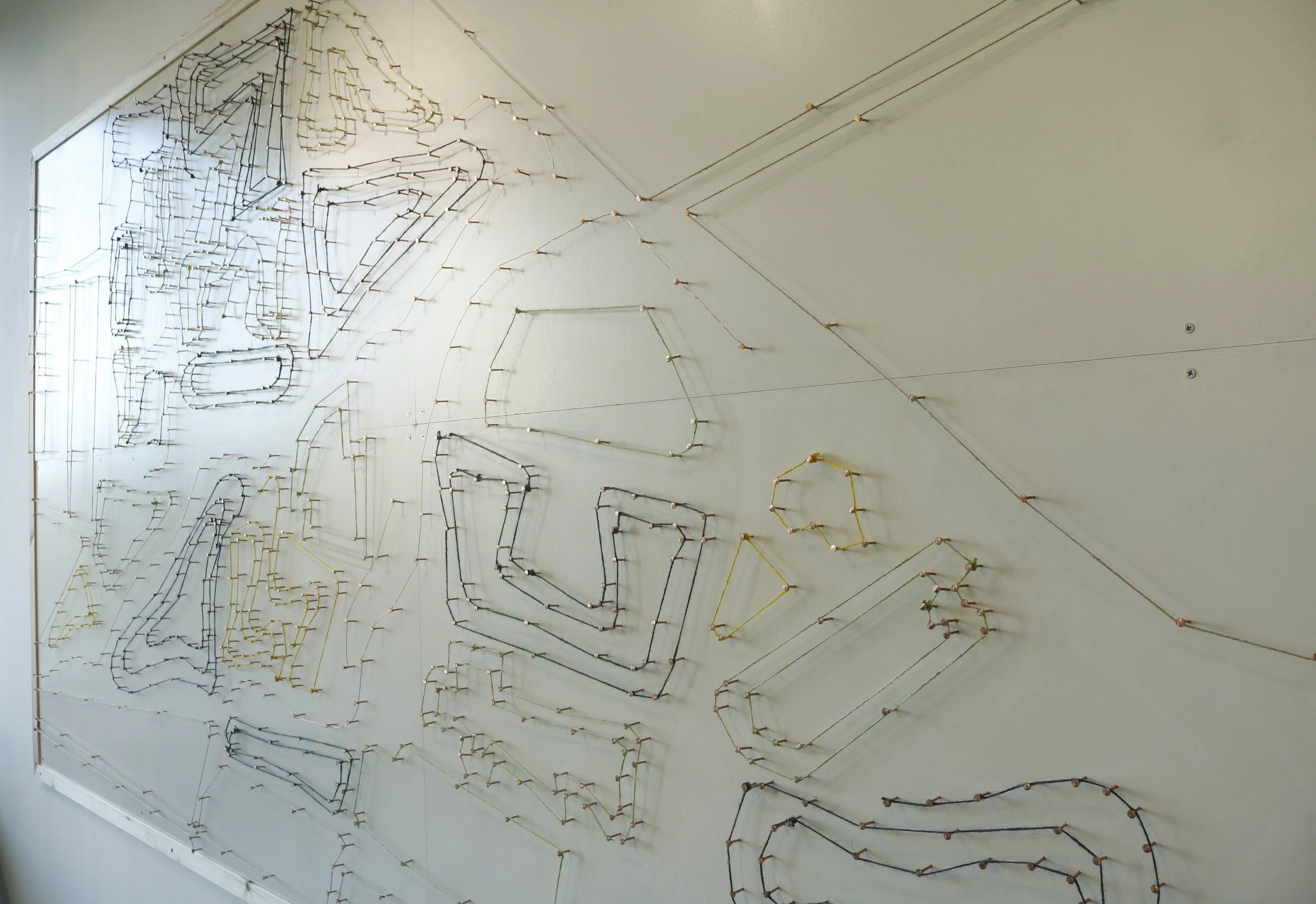
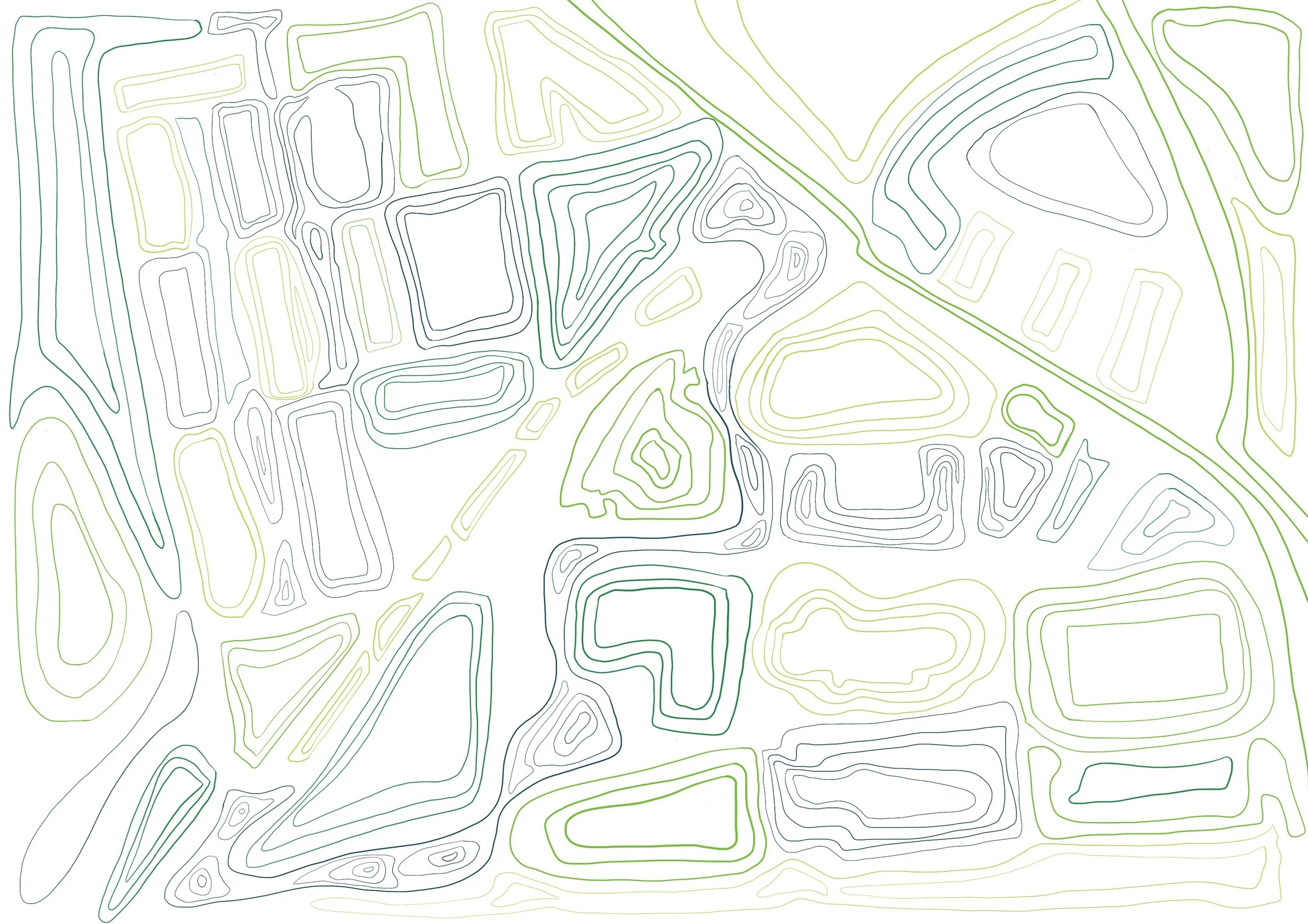
A second wind maps the fluid motion of the wind as it flows around the core and the wider Helix Development project using the dynamic contours of topographic imagery. The reference to wind highlights The Core’s use of sustainable natural resources to generate clean energy and aims to highlight the translation from fossil fuels to renewable energy in the North East.
Topographic maps are commonly used in urban planning to depict landscape structures. They are also used in neuroscience to show communication between sensory regions of the brain. The artist intends this work to prompt discussions exploring our engagement with the surrounding environment, as active participants within the ecosystem.
Hessian string has been used to connect The Core’s host of innovative companies to the site’s local heritage. The Helix Development site sits upon the historic site of Newcastle’s Breweries, most known for producing Newcastle Brown Ale. During the early processes of beer production, wheat, hops and barley were traditionally stored and transported in hessian sacks.
Hessian is a natural material, made from jute plant fibres. Predominantly grown in India and Bangladesh, jute plant fibres are woven together and packed into unstable ground to prevent flooding and control land erosion. This relates to The Core’s flood prevention design, as a response to the flash floods in Newcastle in 2012. The jute plant is also widely used as a sustainable alternative to cotton, as it requires less water and is naturally resistant to pests and diseases, thereby reducing the use of pesticides. Working with a multiuse material embodies The Core’s creative use of space, as a multipurpose centre for community connection, education and scientific innovation.